Your online journey stops too early.
People can see the offering, but still need separate messages to request access, place an order, or check what happens next.

Build an online platform around what your customers and team need to do, from browsing products to placing and managing orders.
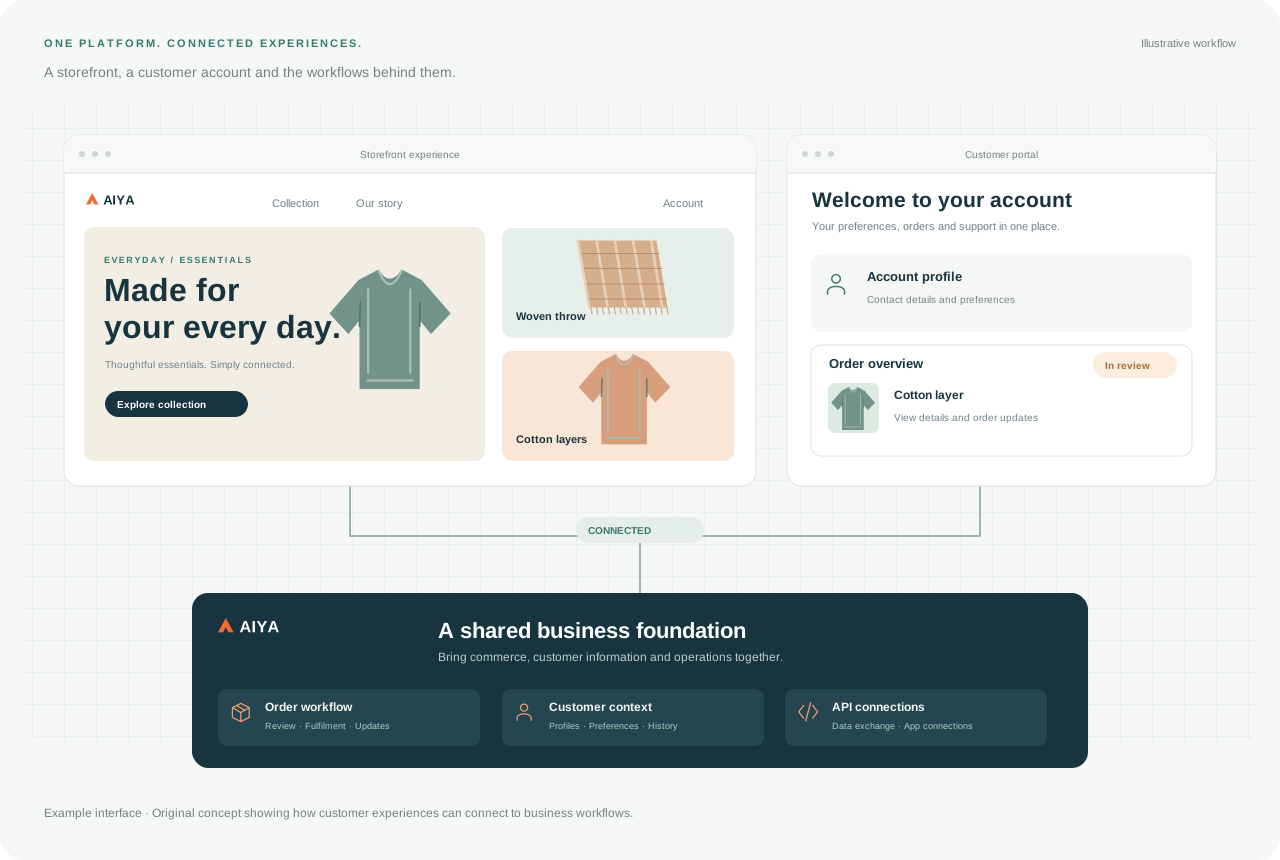
When your website needs to do more than introduce your business, connect customer actions with the workflows your team manages. Plan a storefront, portal, or business platform around the people who will use it.
People can see the offering, but still need separate messages to request access, place an order, or check what happens next.
Information collected online has to be entered again before the team can review it or move the work forward.
Different users, approval steps, or business rules need to be considered as part of the platform design.
Organize the screens around what customers, partners, and staff need to accomplish.
Define the records, actions, and review steps that turn an online interaction into work your team can manage.
Identify which payment, customer, and operational systems should connect, then review the available integration options.
Retailers developing a connected online sales channel · Businesses creating a customer or partner portal · Teams replacing a fragmented request-to-order workflow
Choose the first journey to build and agree on the users, business rules, and systems involved.
Develop the interface and the scoped records, actions, and system connections behind it.
Test representative scenarios, review handovers, and prepare the agreed launch and handover materials.
A company website mainly presents your business and guides visitors to the next step. A platform also supports actions and ongoing workflows, such as accounts, requests, orders, or staff review. We define those actions before selecting the approach.
We review the systems you use, the information that needs to move, and the integration access available. The project scope then identifies the connections to build and any dependencies on existing providers.
Describe who will use the platform, the main action they need to complete, and how your team handles that work today. A sample workflow and a list of current tools give us a practical starting point.
Features, design, integrations, and support requirements shape the project scope and quote.
Choose your solution, share your requirements, and prepare your application for the AIYA team.